What is a manual welding process?
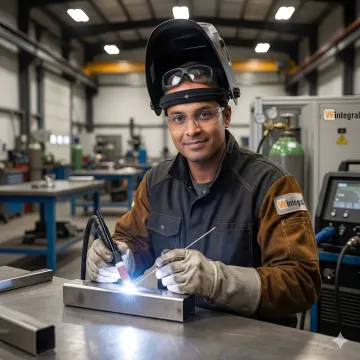
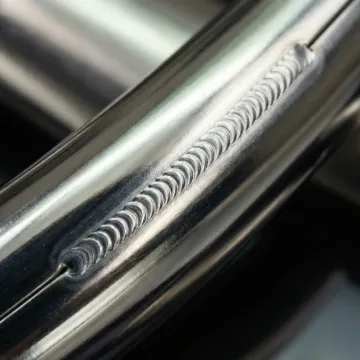
Manual welding is a skilled joining process where a certified welder directly controls the welding torch, filler material, and process parameters by hand. Unlike automated welding, manual processes like TIG (GTAW) and Micro-GTAW allow for precise control of heat input, penetration depth, and weld bead placement, making them ideal for complex geometries, repair work, prototype development, and applications requiring exceptional accuracy. At Wintegral Engineering, our AWS-certified welders perform manual welding using documented procedures to ensure consistent, high-quality results across every project.
How much does a simple welding job cost?
Manual welding costs vary based on material type, component complexity, weld specification requirements, and production volume. Simple single-weld repairs may start at a few thousand rupees, while complex assemblies, exotic materials, or certified aerospace welding will cost more. We provide transparent quotations after evaluating your specific requirements, always emphasizing the most economical welding method that meets your quality standards. For accurate pricing on your project, contact us with component details for a customized quote.
How much does mobile welding cost per hour?
While we don't offer traditional mobile welding services, our Bangalore (Bannerghatta Road) and Pune (Bhosari) facilities provide convenient access for customers across Karnataka and Maharashtra. Hourly rates for manual welding services depend on the welding process (TIG, Micro-GTAW, certified aerospace welding), material specifications, and technician certification requirements. For specialized onsite mould and die repairs, we offer coordinated services with pricing determined by project scope. Contact our team to discuss your specific welding requirements and receive a detailed quotation.
What materials can you manually weld?
Our manual welding services cover a comprehensive range of materials including stainless steel (all grades), aluminum alloys, titanium, carbon steel, tool steels (H-13, P-20, D2, S7), and specialty alloys like Inconel and beryllium copper. We select welding processes and filler materials specifically matched to your base metal, ensuring proper metallurgical compatibility, strength, and corrosion resistance for your application.
Do you offer emergency or rush manual welding services?
Yes, we understand that production-critical repairs and urgent welding needs can't always wait. Our Bangalore and Pune facilities maintain capacity for priority jobs, and we work closely with customers to accommodate tight deadlines whenever possible. Rush service availability and pricing depend on current workload and project complexity. Contact us immediately for urgent welding requirements, and we'll do everything possible to support your production schedule.
What's the difference between TIG welding and Micro-GTAW?
Both are forms of Gas Tungsten Arc Welding (GTAW), but Micro-GTAW uses significantly lower amperage, smaller tungsten electrodes, and finer filler wires to achieve extremely precise, small-scale welds. Standard TIG welding is ideal for general industrial components, structural assemblies, and larger parts, while Micro-GTAW specializes in delicate components, thin materials (under 1mm), miniature assemblies, and applications requiring minimal heat-affected zones, such as medical devices and precision instruments.
Can you weld prototypes and one-off custom components?
Absolutely. Our manual welding services are particularly well-suited for prototype development, R&D support, and small-batch production. We work collaboratively with engineering teams to develop welding procedures, validate joint designs, and iterate quickly during the development phase. Whether you need a single prototype or 100 pre-production units, we provide the flexibility and technical support required for successful product development.
What quality certifications do your welders hold?
Our manual welders are AWS (American Welding Society) certified and trained in specific welding procedures relevant to their work. For aerospace and defense applications, we maintain certified manual GTAW capabilities with full process documentation, operator qualification records, and adherence to customer-specific welding procedure specifications (WPS). All welding work follows documented procedures with traceability and inspection protocols appropriate to the application requirements.