What types of moulds and dies can Wintegral Engineering repair?
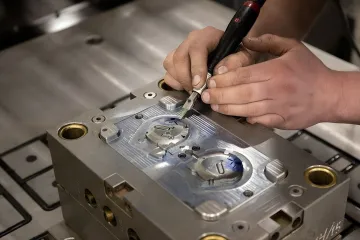
We repair all types of industrial moulds and dies including plastic injection moulds, pressure die-casting dies (HPDC and LPDC), compression/thermoset moulds, rubber moulds, and metal injection moulds. Our multi-process capabilities handle repairs for tooling made from H-13, H-21, H-11, P-20, S7, D2, M2, SS420, and various non-ferrous materials including titanium, beryllium copper, and aluminum.
How long does the typical mould repair process take?
Repair timelines vary based on damage complexity, size, and the welding process required. We provide estimated delivery times after technical analysis of your specific tool. Our service philosophy emphasizes timely deliveries to minimize your production downtime, and we can accommodate urgent repairs when production schedules demand faster turnaround.
Will repaired moulds perform as well as new ones?
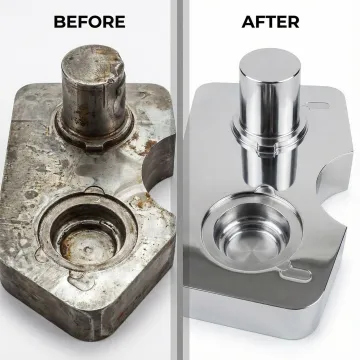
Yes. Our repairs restore cutting edges and critical surfaces to original manufacturing tolerances with the same hardness and physical properties as the base metal. Repaired tools exhibit negligible radial and axial runout, require no post-repair heat treatment, and deliver tool life that equals or exceeds the original. Every repair includes certification for concentricity and straightness.
What is the cost difference between repair and replacement?
Repair typically delivers dramatic cost savings compared to purchasing new tooling. Exact savings depend on tool type, damage extent, and original tool value, but manufacturers commonly save 60-80% of replacement costs. We provide detailed quotations after technical evaluation so you can make informed decisions based on your specific situation.
Can you repair moulds and dies from any manufacturer or brand?
Absolutely. We repair moulds, dies, and indexable cutting tools from any manufacturer or brand. Our expertise with materials and welding processes is brand-agnostic, and we've successfully restored tooling from global manufacturers including Kennametal, Sandvik, Taegutec, Seco, and many others, as well as custom-made tools from local manufacturers.
Do you offer onsite repair services for large moulds?
Yes, we provide onsite repair services for situations where transporting large or heavy moulds is impractical, or when production urgency requires field repairs. Our technicians can travel to your facility with necessary welding equipment to perform repairs, minimizing downtime and logistics complications.
What welding processes do you use for mould repairs?
Our job-shop is equipped with six advanced welding technologies: laser welding, micro-plasma welding, micro-GT, TIG welding, micro-cladding, and proprietary hybrid laser-micro-GT processes. We select the most economical and technically appropriate process for each repair based on material, damage type, and precision requirements.
How do I get started with a mould repair project?
Contact us via phone or email with your repair requirements. We'll ask you to complete a Technical Data Sheet & Measurement (TDSM) questionnaire. Our technical team will analyze your tooling needs, recommend the appropriate repair process, and provide a detailed quotation with estimated delivery time. Upon approval, we proceed with repair, inspection, and delivery of your restored tooling.