What makes laser micro welding superior to conventional welding methods?
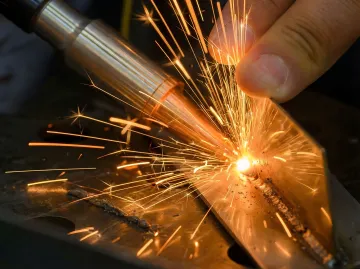
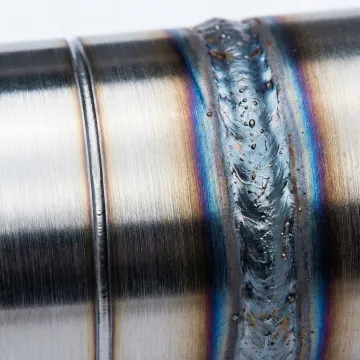
Laser micro welding delivers highly focused energy (0.2-2mm spot size) with controlled pulse duration, creating minimal heat-affected zones and virtually no distortion. This precision is essential for small components, thin materials, and applications where dimensional accuracy must be maintained. Conventional welding methods cannot achieve the same level of control.
Can you repair moulds and dies of any size?
Yes. Our multi-process capabilities handle components from 50 grams to over 20 tons with no practical size limitations. We repair plastic injection moulds, pressure die-casting dies, compression moulds, rubber moulds, and metal injection moulds using laser, micro-plasma, micro-GT, TIG, and micro-cladding processes.
What types of materials can be welded using laser micro welding?
We weld all common tool steels (H-13, H-21, H-11, P-20, S7, D2, M2, SS420) and non-ferrous metals including titanium, beryllium copper, copper, and aluminum. Material compatibility is evaluated during application review, and we use highest-grade welding materials from world-renowned suppliers.
How long does a typical mould or die repair take?
Turnaround time depends on damage complexity, size, and current workload. We provide delivery estimates after technical analysis. Our dual facilities in Bengaluru and Pune enable responsive service, and we prioritize urgent repairs that impact production schedules.
Will repaired tools perform as well as new ones?
Yes. Repairs restore cutting edges and surfaces to original tolerances with the same hardness as base metal, requiring no further heat treatment. Post-repair tool life equals or exceeds original performance. Every repaired indexable cutting tool includes a certificate verifying concentricity and straightness.
Do you offer welding services for medical device components?
Absolutely. We specialize in precision welding for medical devices including sensors, sutures, catheters, and delicate assemblies. Our laser micro welding capabilities provide the controlled heat input and clean joints essential for medical applications requiring strict dimensional stability and biocompatibility.
Can you help us develop in-house laser welding capability?
Yes. We offer complete technology transfer including equipment supply (Vision Laser systems), process development, fixture design, operator training, and ongoing technical support. We validate welding processes at our facility before transferring them to your production environment.
What is your welding defect rate?
Our average welding defect rate is consistently less than 1%, achieved through strict process controls, advanced equipment, and skilled technicians. This quality standard is maintained across all welding processes and thousands of repairs performed since 2011.