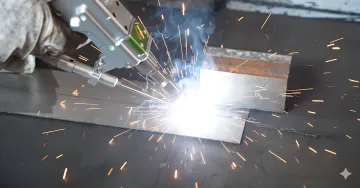
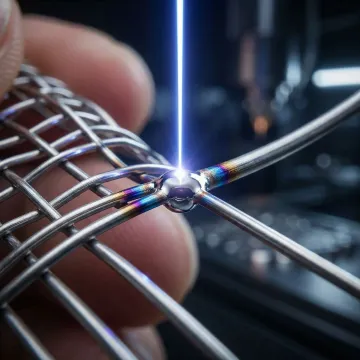
How precise is laser welding?
Laser welding achieves exceptional precision with controlled heat input, spot sizes ranging from 0.2 to 2mm, and welding depths from 0.1 to 2mm. This enables joining of complex geometries and thin materials with minimal thermal distortion, maintaining tolerances critical for aerospace, medical, and precision tooling applications while preserving material integrity.
Is laser welding as strong as MIG?
Laser welding produces high-strength joints comparable to MIG welding but with superior precision and minimal heat-affected zones. While MIG welding excels in high-volume production of thicker materials, laser welding delivers controlled penetration, cleaner welds, and better dimensional stability for precision components where accuracy is paramount.
What materials can be laser welded?
Our laser welding services support stainless steel, titanium, aluminum, carbon steel, tool steels (H-13, H-21, P-20, D2, M2), and non-ferrous metals including beryllium copper. Material selection depends on application requirements, joint design, and mechanical properties needed for the finished assembly.
What is the typical turnaround time for precision welding projects?
Turnaround times vary based on component complexity, welding process selected, and production volume. Prototype welding typically completes within 3-5 business days, while production runs are scheduled based on quantity and technical requirements. We provide delivery timelines upfront after technical evaluation and prioritize urgent production-critical repairs.
Do you provide welding process development for new applications?
Yes, our R&D partnership services include complete welding process development, fixture design, parameter optimization, trial execution, and procedure documentation. We work closely with engineering teams during product development stages to validate weldability, establish production parameters, and support manufacturability requirements.
Can you handle both prototype welding and full production runs?
Absolutely. We support prototype development, small batch production (10-100 parts), and large-volume manufacturing. Our flexible service model accommodates engineering validation projects, pilot production runs, and ongoing contract manufacturing partnerships with documented procedures ensuring consistent quality across all volume levels.
What quality certifications and standards do you follow?
Our welding operations employ AWS-certified welders following documented welding procedures. We maintain strict internal quality controls with less than 1% defect rates, use certified materials from world-renowned suppliers, and conduct pre-delivery inspections. For aerospace and defense applications, we support certified GTAW processes with full documentation and operator qualification.
How does pricing work for custom welding projects?
Pricing is determined based on component material, weld complexity, precision requirements, and production volume. We offer multiple pricing options depending on welding process selected, with separate structures for prototyping, small-volume, and large-volume manufacturing. Quotations are provided after technical evaluation, emphasizing economical solutions without compromising quality.